
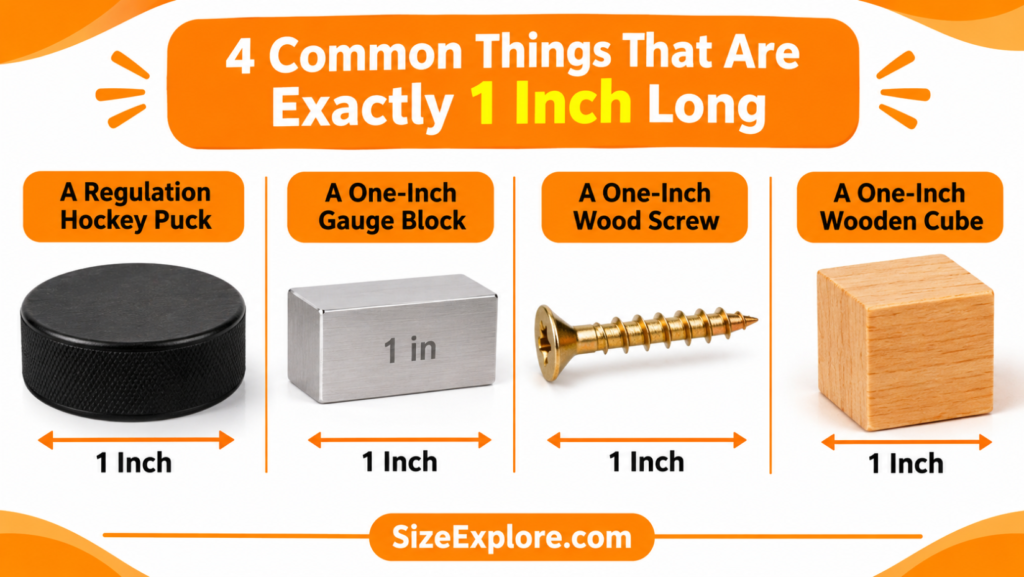
How long is 1 inch? One inch is exactly 2.54 centimeters (cm), 25.4 millimeters (mm), or 0.0254 meters (m). It is a small unit of length commonly used to measure everyday objects, electronics, household items, screens, and construction materials.
If you want to understand how long one inch is, the easiest way is to compare it with objects that have a specified one-inch dimension. This guide explains the exact size of one inch, nine one-inch measurement references, conversion charts, and practical ways to measure an inch without a ruler.
How Long Is 1 Inch?
Everything you need to know in one place.
One inch in centimeters
One inch in millimeters
One inch in feet
One inch in yards
One inch in meters
One inch in micrometers
One inch in nanometers
A quick everyday size estimate
Understanding 1 Inch
How long is 1 inch? An inch is a standard unit of length in the imperial measurement system. It measures exactly 2.54 centimeters or 25.4 millimeters. For a quick visual reference, one inch is approximately the width of an adult thumb near its tip, although actual thumb sizes vary. This measurement is useful when checking product dimensions, measuring small objects, comparing household items, or completing everyday DIY projects.
How Long Is 1 Inch Exactly?
One inch is a standard unit of length in the imperial and US customary measurement systems. Its metric equivalent is internationally defined as exactly 25.4 millimeters.
Here are the exact conversions of one inch:
| Measurement Unit | Equivalent to 1 Inch |
| Centimeters | 2.54 cm |
| Millimeters | 25.4 mm |
| Meters | 0.0254 m |
| Feet | 0.083333 ft |
| Yards | 0.027778 yd |
| Micrometers | 25,400 µm |
The most important conversion to remember is:
1 inch = 2.54 centimeters = 25.4 millimeters
These values are exact, not approximations.
See Also: Size Explore
What Does 1 Inch Look Like? 9 Objects With a One-Inch Dimension
Not every everyday object measures exactly one inch. Coins, batteries, thumbs, and similar items may be close to one inch, but their dimensions are different.
The following references have a specified one-inch dimension or can be prepared to exactly one inch using a measurement standard.
1. A Regulation Hockey Puck
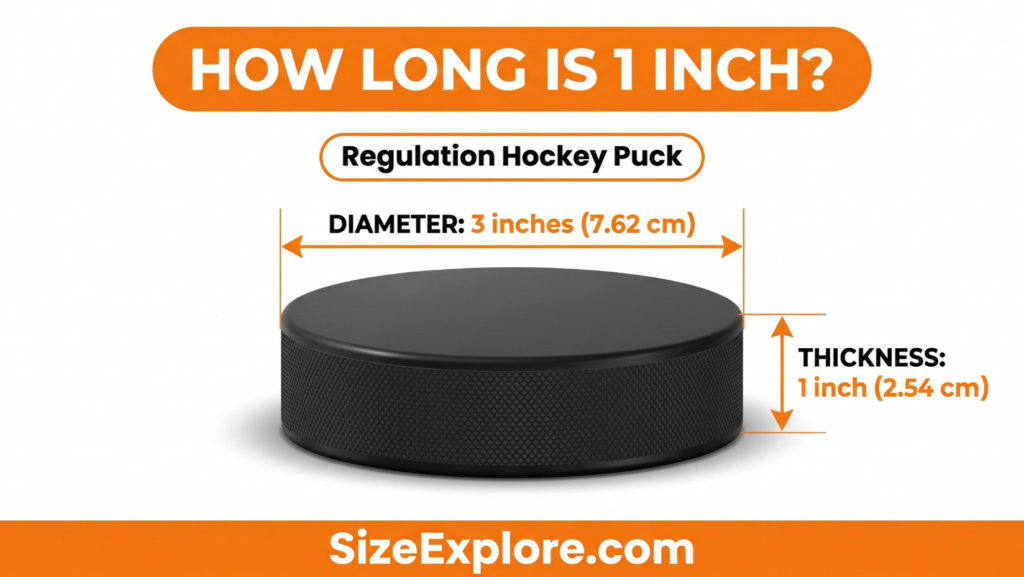
A regulation ice hockey puck is one of the clearest examples of an object with an exact one-inch dimension.
- Thickness: 1 inch (25.4 mm)
- Diameter: 3 inches (76.2 mm)
- Shape: Circular cylinder
The thickness of a regulation puck is specified as one inch in hockey equipment rules.
2. A One-Inch Gauge Block
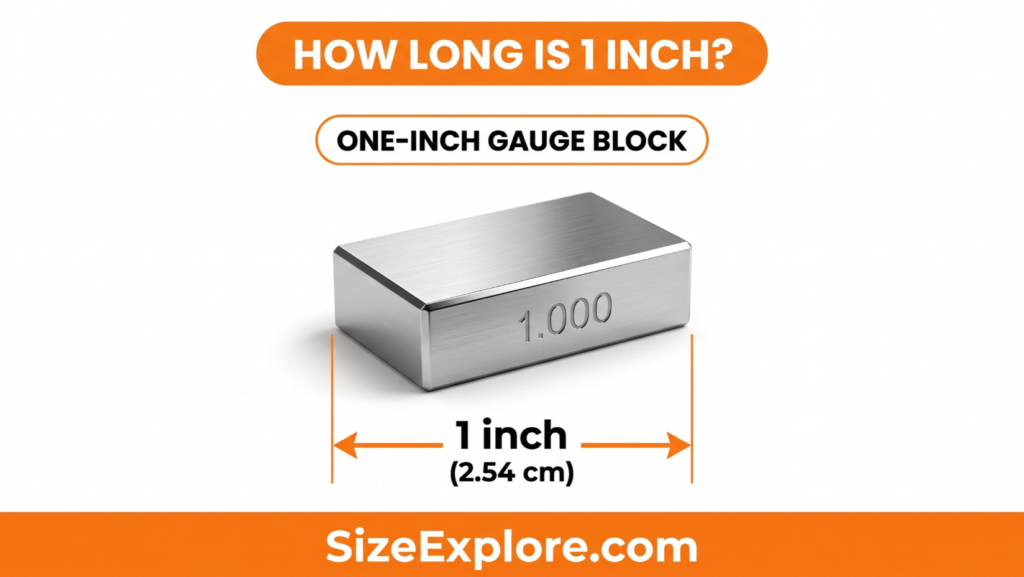
A one-inch gauge block is a precision measuring tool used in manufacturing, calibration, and dimensional inspection.
- Nominal length: 1 inch
- Measurement reference: Distance between its measuring faces
- Purpose: Checking and calibrating measuring instruments
Gauge blocks are manufactured and calibrated according to specified tolerances. They are much more reliable for precision measurements than ordinary household objects.
3. A One-Inch Wood Screw
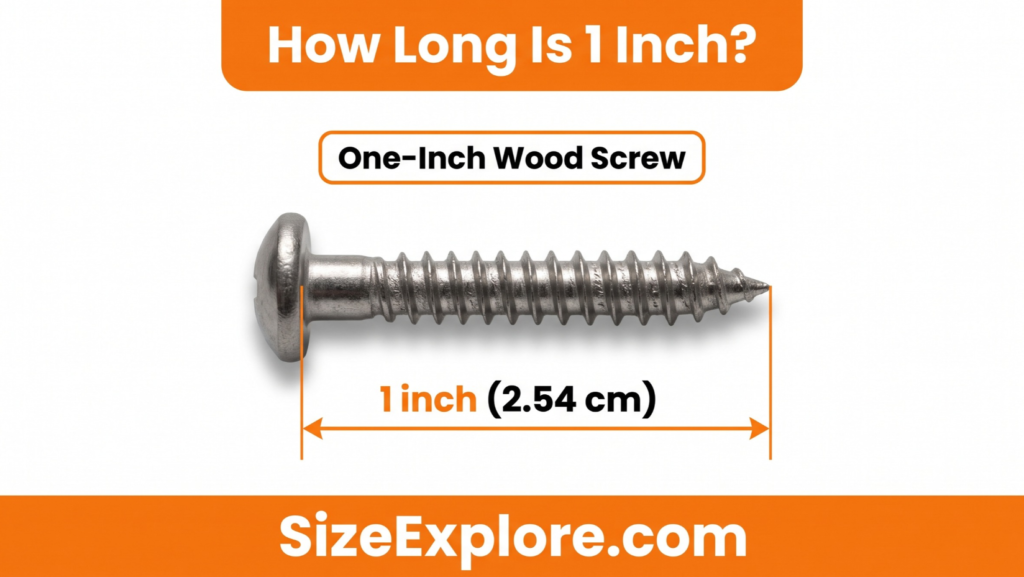
A screw sold in a one-inch length has a nominal length of one inch according to its product specification.
- Nominal length: 1 inch
- Equivalent: 25.4 mm
- Common uses: Woodworking, furniture, and DIY projects
Actual screw dimensions depend on the screw type and measurement convention. A nominal one-inch screw should not automatically be treated as a precision calibration reference.
4. A One-Inch Wooden Cube
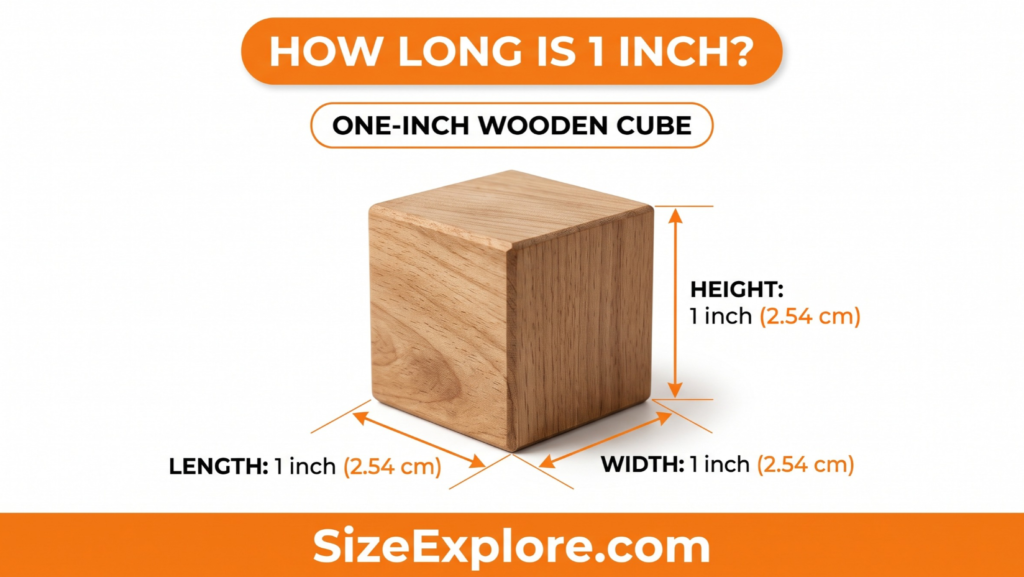
A wooden cube manufactured to a one-inch specification has a nominal side length of one inch.
- Length: 1 inch
- Width: 1 inch
- Height: 1 inch
A cube is particularly useful because it demonstrates one inch in three dimensions rather than only as a line.
For precision work, check the cube’s actual dimensions and manufacturing tolerance.
5. A One-Inch Square Tile
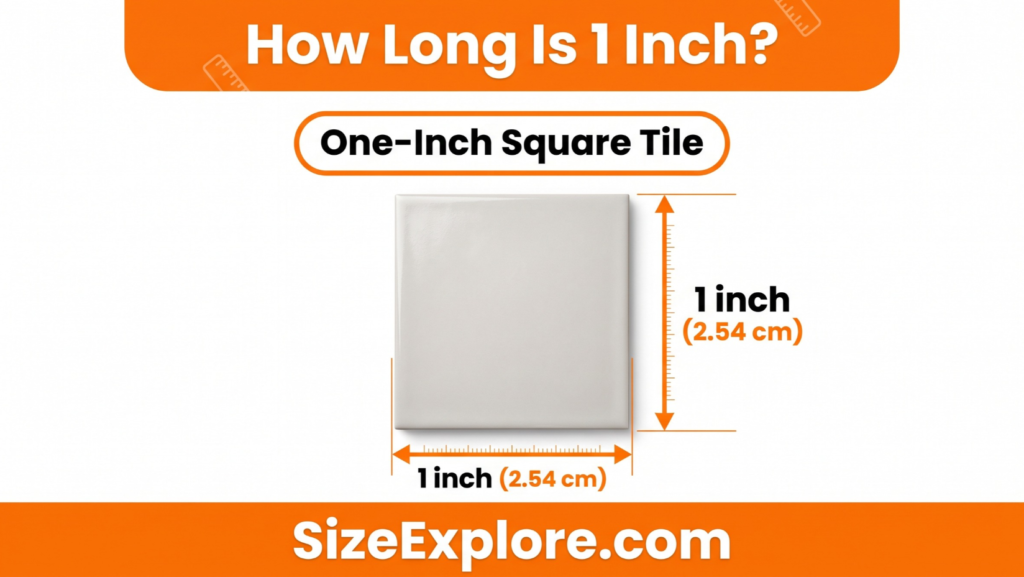
A square tile sold with a one-inch nominal size provides a useful reference for understanding small surface dimensions.
- Length: 1 inch
- Width: 1 inch
- Shape: Square
The actual finished size may differ from its nominal size depending on the product and manufacturer.
6. A One-Inch-Wide Ribbon
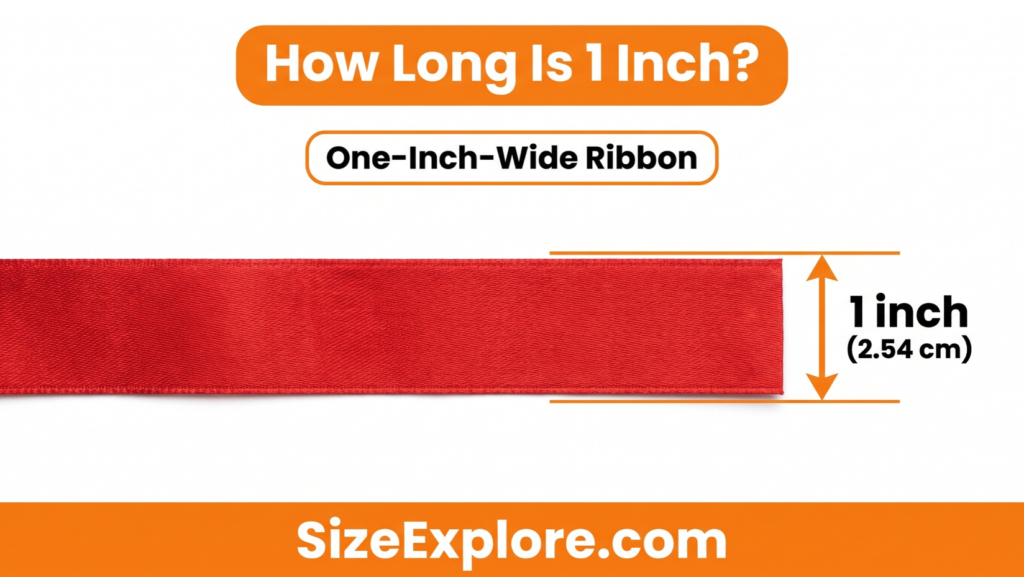
Ribbon is available in specified widths, including one-inch-wide varieties.
- Width: 1 inch
- Equivalent width: 25.4 mm
- Common uses: Crafts, decoration, gift wrapping, and sewing
A ribbon labeled one inch wide is a convenient reference, although the actual width should be checked if accuracy matters.
7. A One-Inch Paper Strip
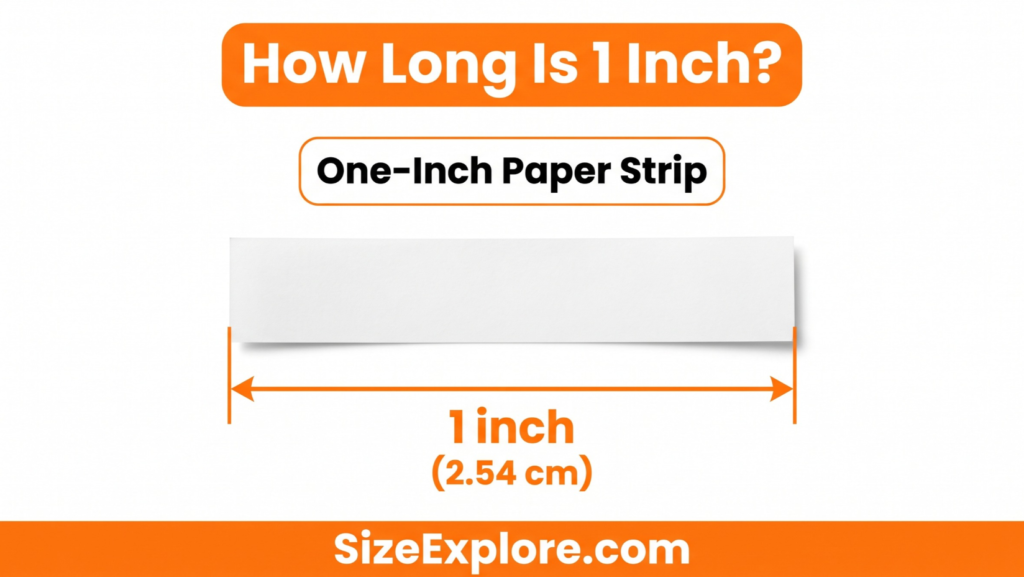
A paper strip cut using a ruler can be exactly one inch long.
- Length: 1 inch
- Equivalent: 2.54 cm
- Material: Paper or cardstock
Unlike naturally sized objects, this reference can be prepared to the exact measurement using a reliable ruler.
8. A One-Inch Measuring Interval on a Ruler
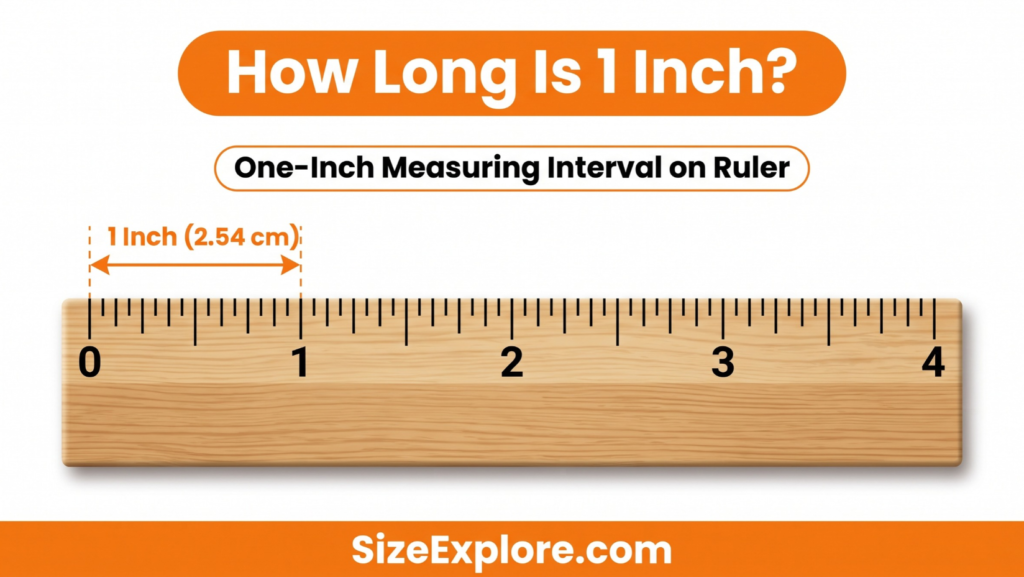
The interval between the zero mark and the one-inch mark on a properly calibrated ruler represents exactly one inch.
- Starting point: 0
- Ending point: 1 inch
- Total distance: 25.4 mm
This is one of the simplest ways to understand the actual length of an inch.
9. A One-Inch Printed Measurement Reference
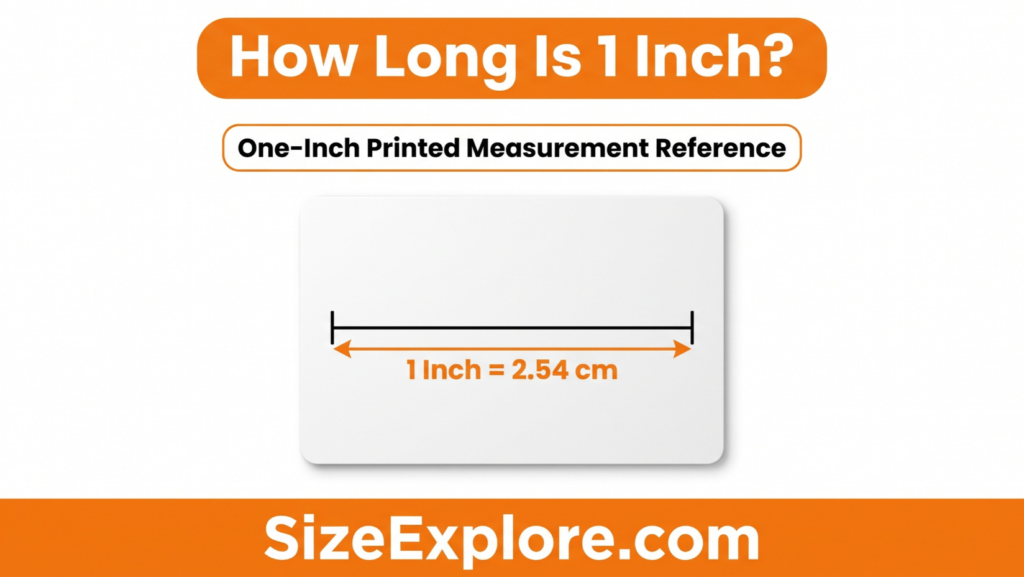
A printed measurement reference can contain a line designed to measure exactly one inch.
- Length: 1 inch
- Equivalent: 25.4 mm
- Purpose: Measuring and comparing small objects
However, printing must be set to 100% or actual size. Options such as “Fit to Page” can change the printed dimensions, so verify the scale before using it.
Comparison Table: 9 One-Inch Measurement References
| Object or Reference | One-Inch Dimension | Type |
| Regulation hockey puck | Thickness | Official specification |
| One-inch gauge block | Calibrated length | Precision measurement |
| One-inch wood screw | Nominal length | Product specification |
| One-inch wooden cube | Each side | Specified size |
| One-inch square tile | Length and width | Specified size |
| One-inch-wide ribbon | Width | Specified size |
| One-inch paper strip | Cut length | Measured reference |
| Ruler interval | Zero to 1-inch mark | Standard measurement |
| Printed one-inch line | Line length | Verified print reference |
Important: A specified one-inch dimension does not always mean every manufactured item is physically perfect to 25.4 mm. Manufacturing tolerances, cutting accuracy, material changes, and printing settings can introduce small differences.
How Long Is 1 Inch Compared With Other Measurements?
Understanding how one inch compares with other familiar measurements makes conversions easier.
| Measurement | Equivalent Length |
| 0.25 inch | 0.635 cm |
| 0.5 inch | 1.27 cm |
| 0.75 inch | 1.905 cm |
| 1 inch | 2.54 cm |
| 1.5 inches | 3.81 cm |
| 2 inches | 5.08 cm |
| 3 inches | 7.62 cm |
| 4 inches | 10.16 cm |
| 5 inches | 12.7 cm |
| 6 inches | 15.24 cm |
| 10 inches | 25.4 cm |
| 12 inches | 30.48 cm |
One inch is relatively small compared with a foot or meter, but it is useful for measuring small objects and product dimensions.
Is 1 Inch the Same as 2.5 Centimeters?
No. One inch equals exactly 2.54 centimeters, while 2.5 centimeters equals approximately 0.984 inches.
The difference is:
- 0.04 centimeters
- 0.4 millimeters
For quick estimates, 2.5 cm is close to one inch. For accurate measurements, use 2.54 cm.
Inches to Centimeters Conversion Chart
| Inches | Centimeters |
| 0.25 in | 0.635 cm |
| 0.5 in | 1.27 cm |
| 0.75 in | 1.905 cm |
| 1 in | 2.54 cm |
| 1.5 in | 3.81 cm |
| 2 in | 5.08 cm |
| 2.5 in | 6.35 cm |
| 3 in | 7.62 cm |
| 4 in | 10.16 cm |
| 5 in | 12.7 cm |
| 6 in | 15.24 cm |
How to Convert Inches Into Centimeters
To convert inches into centimeters, multiply the number of inches by 2.54.
Formula:
Centimeters = Inches × 2.54
Examples:
- 2 inches × 2.54 = 5.08 cm
- 3 inches × 2.54 = 7.62 cm
- 5 inches × 2.54 = 12.7 cm
- 10 inches × 2.54 = 25.4 cm
This formula works for any inch measurement.
How to Measure 1 Inch Without a Ruler
If you do not have a ruler, you can use a previously verified one-inch object or create a reference when a ruler is available.
Method 1: Use a Regulation Hockey Puck
The thickness of a regulation hockey puck is one inch.
This is a useful reference if you have access to a standard puck.
Method 2: Use a One-Inch Gauge Block
A calibrated one-inch gauge block is suitable for precision comparisons.
It is especially useful in workshops, manufacturing, and measurement applications.
Method 3: Make a One-Inch Paper Strip
Use a ruler to measure a paper strip from zero to one inch.
Cut the strip along the measurement marks and keep it as a reusable reference.
Method 4: Use a Verified Printed Ruler
Print a ruler at 100% or actual size.
Check its dimensions against a reliable measuring instrument before using it.
These methods are more reliable than guessing with objects that are merely close to one inch.
How to Find 1 Inch on a Ruler
A standard ruler marked in inches divides each inch into smaller sections.
Depending on the ruler, these divisions may include:
- 1/2 inch
- 1/4 inch
- 1/8 inch
- 1/16 inch
On a typical ruler, the first major inch mark after zero represents one inch.
To measure one inch:
- Place the starting edge of your object at the zero mark.
- Locate the first full-inch mark.
- Align the other edge with that mark.
- Read the measurement.
For accurate results, make sure the object starts at zero rather than at the physical edge of the ruler.
Where Is 1 Inch Commonly Used?
One inch is widely used in everyday measurements, product dimensions, and manufacturing.
Household Items
Small household objects, screws, buttons, and decorative materials are often measured in inches.
Electronics
Computer components, connectors, accessories, and certain device dimensions may use inches.
Screens and Displays
Television, laptop, and monitor screen sizes are usually measured diagonally in inches.
For example, a 24-inch monitor has a diagonal screen measurement of 24 inches, not necessarily a width of 24 inches.
Construction and DIY Projects
Inches are commonly used to measure wood thickness, hardware, fittings, and smaller construction dimensions.
Clothing and Accessories
Some clothing measurements, belts, accessories, and product sizes use inches.
Is 1 Inch Big or Small?
One inch is considered a small measurement, especially compared with a foot or meter.
However, it can make a noticeable difference when measuring small objects.
For example:
- One inch is 2.54 cm.
- Twelve inches make one foot.
- Thirty-six inches make one yard.
A difference of one inch can matter when measuring furniture, clothing, hardware, or electronic components.
FAQs
How long is 1 inch exactly?
One inch is exactly 2.54 centimeters or 25.4 millimeters.
What object is exactly 1 inch thick?
A regulation ice hockey puck is specified as exactly one inch thick.
What is a one-inch gauge block?
A one-inch gauge block is a precision measuring tool with a nominal calibrated length of one inch. Gauge blocks are used to standardize and inspect measurements.
Is 1 inch bigger than 1 centimeter?
Yes. One inch is 2.54 times longer than one centimeter.
How many millimeters are in 1 inch?
There are exactly 25.4 millimeters in one inch.
Can I measure one inch without a ruler?
Yes. You can use a verified one-inch object, a calibrated gauge block, a regulation hockey puck, or a previously measured paper strip.
How many inches are in a foot?
There are exactly 12 inches in one foot.
Is 2.5 cm equal to 1 inch?
No. One inch is 2.54 cm. The difference is small, but it matters for precise measurements.
See Also: Size Explore
Conclusion
One inch is exactly 2.54 centimeters or 25.4 millimeters. It is a small but important unit of length used in everyday life, product dimensions, construction, electronics, and manufacturing.
A regulation hockey puck provides an exact one-inch thickness reference, while a calibrated gauge block offers a precision measurement standard. Specified one-inch items and measured references can also help you understand the size of this unit.
Remember this simple conversion:
1 inch = 2.54 cm = 25.4 mm
Once you understand this measurement and know how to use a reliable one-inch reference, measuring and estimating small dimensions becomes much easier.